

Munters MLT30
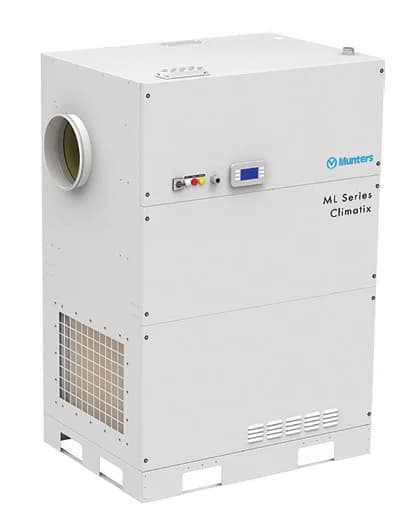
Industrial desiccant dehumidification
Plan the airflow. Control the moisture.
An industrial desiccant dehumidifier with AirC 800 control and a rated process airflow of 3,000 m³/h for low-moisture applications.
The Munters MLT30 is a stand-alone desiccant dehumidifier for applications requiring low moisture levels. The current AirC 800 configuration combines a sealed rotor assembly with separate process, reactivation, and heat-recovery air sections.
A suitable installation starts with the required humidity and temperature, moisture load, and proposed ductwork. Celsius can review those requirements alongside the available space, utilities, and control connections before the equipment configuration is agreed.
- 3,000 m³/hRated process airflow
- AirC 800Control system
- DesiccantMoisture-removal technology
System features
Build the unit around the application.
Confirm the ordered heating, controls, and accessories for your installation.
Sealed rotor assembly
Dedicated sections separate the drying, reactivation, and heat-recovery airflows within the unit.
AirC 800 control
The current model sheet specifies AirC 800 controls with alarm functions for the dehumidification process.
Reactivation choices
Electric, steam, or gas reactivation configurations are listed; select the option around the available utilities.
Integration options
Modbus, BACnet, external controls, AirC Wireless, and AirC Connect are listed options to confirm for the project.
Technical details
MLT30 data for installation planning.
Based on the current manufacturer AirC 800 sheet. Airflow is not a moisture-removal capacity rating.
- Technology
- Desiccant dehumidification
- Control system
- AirC 800
- Rated process airflow
- 3,000 m³/h
- Process air available static pressure
- 300 Pa
- Rated reactivation airflow
- 630 m³/h
- Operating temperature
- −20°C to +40°C
- Reactivation alternatives
- Electric, steam, or gas; configuration dependent
From selection to operation
Coordinate the complete air system.
Agree the installation and commissioning scope for the selected configuration.
Define the required conditions
Provide the process-air conditions, target humidity, moisture sources, and operating schedule.
Confirm utilities & air paths
Review duct resistance, reactivation supply, exhaust routing, service access, and control options.
Commission & review
Assess the agreed operating conditions and arrange environmental monitoring and maintenance responsibilities.
Controlled-environment applications
Match the system to the moisture load.
Suitability and sizing depend on the individual environment.

Industrial process areas
Discuss a ducted drying system around the conditions required by materials and processes.

Storage facilities
Assess the humidity-control duty across storage areas and adjoining air paths.
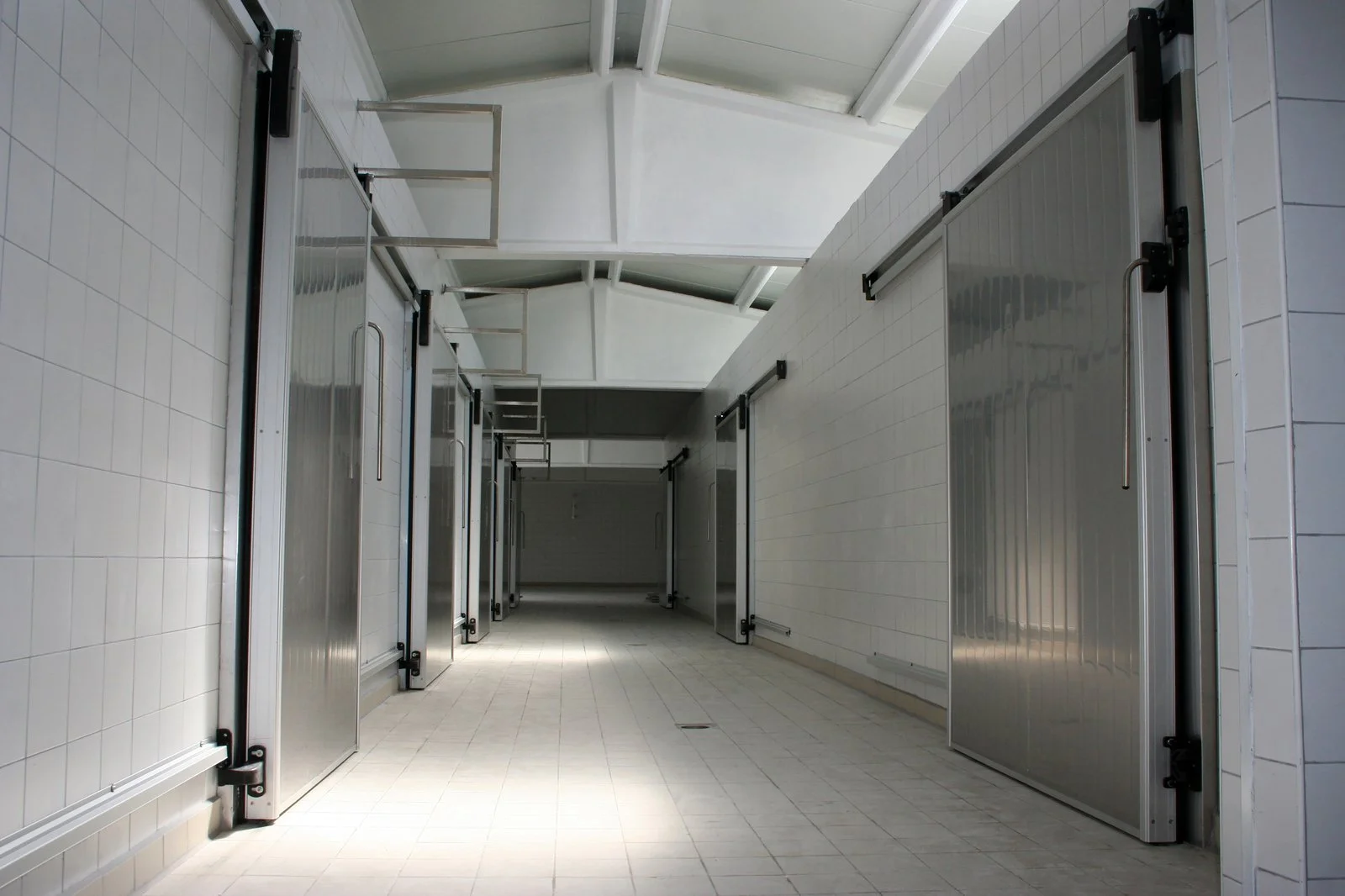
Refrigerated environments
Review the room conditions, access patterns, and installation arrangement before selection.
Product enquiries
Define the humidity-control duty.
Share the required conditions, process airflow needs, available utilities, and installation layout to discuss the MLT30 configuration.
Enquire about this productDoes 3,000 m³/h describe water removal?
No. It is the rated process airflow. Moisture removal depends on inlet temperature and humidity and the selected operating arrangement; sizing should use the manufacturer performance information for the actual duty.
Are remote communication features included in every unit?
The current sheet lists communication and external-control options, including AirC Connect and AirC Wireless. Confirm the controls, accessories, and network requirements included in the proposed configuration.